Square Footage Is Money: How to Get the Most Out of Your Printshop Floor
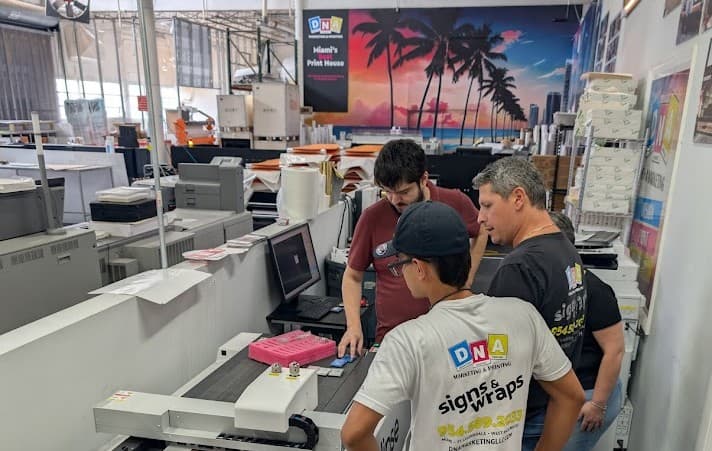
If you run a printshop, you already know that floor space is one of your most valuable — and most limited — resources. Every piece of equipment you bring in takes up real estate that could be used for production, workflow, or simply giving your team room to move. So when it comes time to invest in new gear, the question isn't just "what can this machine do?" It's "is this machine worth the space it takes up?"
ROI Starts at the Floor Plan
When evaluating equipment, most shops focus on speed specs and price tags. But the smarter calculation includes footprint. A machine that costs less upfront but sprawls across your floor — while delivering the same output as a more compact option — is actually the more expensive choice. Think about it: that extra space could hold a finishing station, a second operator workstation, or simply allow smoother job flow between departments.
The best equipment investments combine a compact footprint with high throughput. That ratio — output per square foot — is one of the most underrated metrics in the industry.
Downtime Is the Hidden Space Waster
Here's something that doesn't show up on a spec sheet: a machine that's down for maintenance or repairs isn't just costing you in service fees — it's occupying floor space while producing nothing. A piece of equipment with a poor reliability record is essentially a very expensive storage unit on your best days.
When comparing equipment, ask vendors hard questions about mean time between failures, average repair turnaround, and parts availability. A machine with slightly higher upfront costs but near-zero downtime will almost always outperform the cheaper option over a 3–5 year horizon.
Think in Systems, Not Single Machines
The most efficient printshops treat their floor as an integrated system. Every piece of equipment should complement the workflow around it — reducing handling, minimizing operator steps, and keeping jobs moving from intake to delivery without bottlenecks. A compact, reliable machine in the right position can do more for your throughput than a powerhouse device tucked awkwardly in a corner.
Before your next purchase, map out your floor. Identify where jobs slow down, where space is being wasted, and where the right equipment could make the whole operation run smoother. Your floor plan is your strategy — treat it that way.
Want to talk through your floor layout and equipment options? Let's connect.