A Complete History & Guide to Laser Engraving and Marking Technologies
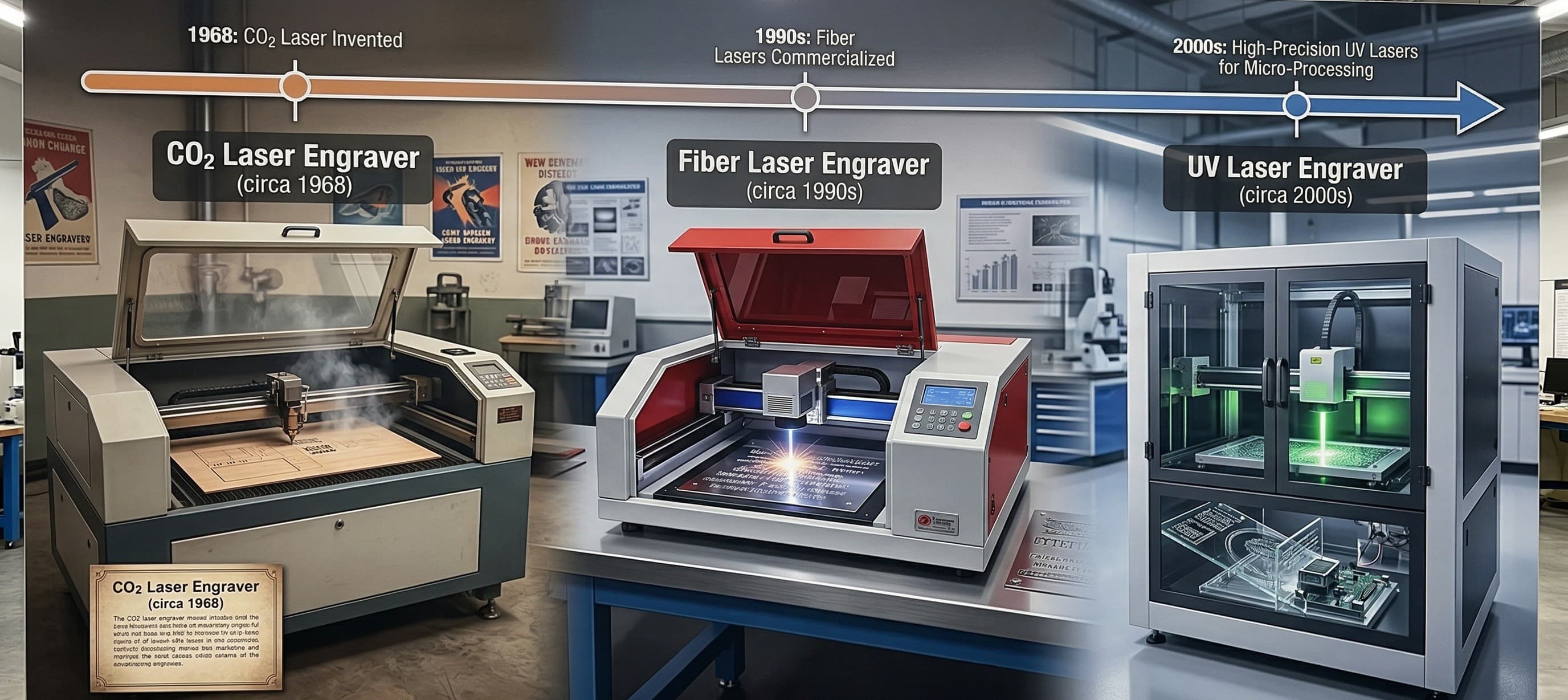
Choosing the right laser engraving or marking technology can make the difference between a successful production line and costly mistakes. Whether you're marking metal parts for traceability, personalizing promotional products, or creating intricate designs on wood and acrylic, understanding the strengths and limitations of each laser type is essential.
At PressTech LLC, we've spent four generations helping businesses select and maintain the right laser equipment for their needs. In this guide, we'll break down the four main laser technologies available today, explaining what makes each one unique and where they excel.
The Four Main Laser Technologies
1. CO2 Lasers
History and Development
The CO2 laser was invented in 1964 by Kumar Patel at Bell Labs, making it one of the earliest gas lasers to be developed. Within a few years, it became clear that CO2 lasers had unique advantages for industrial applications. By the 1970s, companies began using CO2 lasers for cutting and welding in manufacturing. The technology truly revolutionized industries in the 1980s and 1990s when compact, affordable systems became available for small businesses.
The introduction of computer numerical control (CNC) in the 1990s transformed CO2 lasers from specialized industrial tools into versatile machines accessible to sign shops, fabricators, and even hobbyists. Today, CO2 laser technology represents the most mature and widely deployed laser engraving and cutting technology in the world.
How They Work: The Physics
CO2 lasers generate a beam through an electrically excited gas mixture, typically composed of:
- Carbon Dioxide (CO2): 10-20% - The lasing medium that produces the infrared light
- Nitrogen (N2): 10-20% - Helps excite CO2 molecules efficiently
- Helium (He): 60-80% - Manages heat and helps maintain population inversion
When an electrical discharge passes through this gas mixture in a sealed tube, the nitrogen molecules become excited and transfer their energy to CO2 molecules. As these CO2 molecules return to their ground state, they emit photons at a wavelength of 10.6 micrometers (deep infrared). Mirrors at each end of the tube create a resonant cavity, amplifying the light into a powerful, coherent beam.
The 10.6 μm wavelength is particularly important because organic materials (wood, plastic, paper, fabric, leather) have molecular bonds that strongly absorb energy at this frequency. This makes CO2 lasers extraordinarily efficient at vaporizing these materials.
Two Main Tube Designs:
-
Sealed Tube (DC-Excited): Most common in small to mid-size systems. The gas is sealed in a glass tube with a lifespan of 2-5 years. These are simpler and more affordable but eventually require tube replacement.
-
RF-Excited (Metal/Ceramic): Used in high-end systems like Trotec. These use radio frequency excitation instead of DC discharge, offering longer life (10+ years), more stable beam quality, and compact design. They cost more initially but have lower long-term operating costs.
Industries and Applications
Sign Making and Display Graphics CO2 lasers dominate the sign industry. They excel at cutting channel letters from acrylic, engraving dimensional signs from wood or HDU (high-density urethane), and creating intricate patterns in metal-backed acrylic for illuminated signage. The ability to quickly prototype and produce custom signs makes CO2 lasers indispensable for modern sign shops.
Promotional Products and Personalization From engraved cutting boards and wine glasses to custom leather goods and branded corporate gifts, CO2 lasers enable the multi-billion dollar personalization industry. The technology allows businesses to offer mass customization—producing one-off personalized items as economically as bulk orders.
Packaging and Paper Converting The packaging industry uses CO2 lasers for cutting custom boxes, creating prototypes, and producing specialty packaging with intricate die-cut patterns. The clean, precise cuts eliminate the need for expensive steel rule dies for short runs.
Textile and Fashion Laser cutting has revolutionized fabric cutting, especially for synthetic materials like polyester. Designers use CO2 lasers to create intricate lace-like patterns, cut appliqués, and add decorative etched effects to denim. The sealed edge created by laser cutting prevents fraying in many synthetic fabrics.
Architectural Model Making Architects and designers use CO2 lasers to cut precise scale models from basswood, chipboard, and acrylic. The technology has replaced traditional hand-cutting methods, enabling far more complex and accurate models in a fraction of the time.
Rubber Stamp and Flexographic Plate Making Before digital printing dominated, CO2 lasers transformed the stamp-making industry. They can engrave rubber and photopolymer materials to create custom stamps and flexographic printing plates with fine detail that would be impossible to achieve by hand.
Awards, Trophies, and Recognition Products The awards industry relies heavily on CO2 lasers for engraving acrylic, glass (surface etching), and wood plaques. The ability to quickly personalize each award with names, dates, and achievements makes CO2 lasers the backbone of this industry.
Educational and Maker Spaces Schools, libraries, and maker spaces have widely adopted CO2 lasers because of their versatility and relative safety (when properly used). Students can work with wood, acrylic, cardboard, and leather to create everything from architectural models to product prototypes.
Material Interaction: What Makes CO2 Special
The 10.6 μm wavelength interacts with materials through thermal absorption. When the beam strikes a surface:
- Surface Heating: The material's surface rapidly heats to vaporization temperature
- Vaporization: The material transitions directly from solid to gas (ablation)
- Assist Gas: Compressed air or nitrogen blows away vaporized material and prevents combustion
- Heat-Affected Zone: A small area around the cut experiences thermal effects
This process works exceptionally well on organic materials because their molecular structure readily absorbs infrared energy. Materials with high water content, carbon bonds, or cellulose structure are ideal candidates for CO2 laser processing.
Best Applications
- Wood engraving and cutting (plywood, MDF, solid hardwoods, veneer)
- Acrylic fabrication (cast and extruded sheets up to 1" thick)
- Leather goods (cutting, engraving, surface texturing)
- Fabric cutting (synthetics, felt, some natural fibers)
- Paper and cardboard (invitations, packaging, pop-up books)
- Glass surface etching and frosting
- Rubber stamp making and gasket cutting
- Cork, felt, and foam materials
- Anodized aluminum (removes anodization layer for contrast marking)
- Painted or powder-coated metals (removes coating to reveal bare metal)
Advantages
- Unmatched Versatility: Works on the widest range of materials of any laser type
- Cutting Power: Can cut through thick materials (up to 1" acrylic, 3/4" wood with sufficient wattage)
- Speed: Very fast engraving and cutting on non-metals
- Edge Quality: Produces flame-polished edges on acrylic and clean cuts on wood
- Mature Technology: Decades of refinement, extensive knowledge base, many service providers
- Lower Entry Cost: More affordable than fiber lasers for similar work envelope sizes
- Software Compatibility: Works with standard design software (CorelDRAW, Adobe Illustrator, AutoCAD)
Limitations
- Limited Metal Capability: Cannot mark bare metals (except with specialty coatings). Can mark anodized aluminum, painted metals, and some plated materials by removing the surface layer
- Consumable Maintenance: Mirrors and lenses require regular cleaning; optics can degrade or become damaged; sealed tubes eventually fail (2-5 years typical lifespan)
- Power Consumption: Higher electrical draw than fiber or diode systems (a 100W laser may consume 800-1000W)
- Cooling Requirements: Requires water chiller (closed-loop recommended) or CW-5000 style cooler
- Size: Larger footprint due to beam delivery system using mirrors and resonator length
- Reflective Materials: Cannot process copper, brass, or mirror-finish metals safely (beam reflection can damage optics)
Technical Specifications
Typical Power Range: 30W to 150W for engraving/light cutting, 150W to 400W+ for industrial cutting applications
Beam Delivery: Mirror-based system with 3-4 mirrors directing beam from tube to cutting head
Focal Length Options:
- 1.5" (38mm) - Fine detail engraving
- 2.0" (50mm) - General purpose engraving
- 2.5" (63mm) - Standard cutting lens
- 4.0" (101mm) - Thick material cutting
- 5.0" (127mm) - Very thick materials
Operating Costs:
- Tube replacement: $800-$4,000 every 2-5 years (sealed tubes)
- Mirrors: $50-150 each, annual replacement typical
- Lenses: $100-300 each, replace as needed (3-12 months depending on use)
- Cooling: Electricity for chiller/cooler
Who Should Choose CO2
- Sign shops working primarily with acrylic, wood, HDU, and dimensional lettering
- Promotional product companies offering personalized gifts, awards, and corporate items
- Print shops expanding into specialty packaging, invitations, and dimensional printing
- Textile and fashion businesses cutting fabric, creating appliqués, or customizing garments
- Architectural firms creating scale models and presentation materials
- Maker spaces and educational institutions needing versatile, multi-material capability
- Job shops that need to handle diverse customer requests across many material types
- Anyone whose primary work is cutting and engraving non-metal materials
2. Fiber Lasers
History and Development
Fiber laser technology emerged in the 1960s when scientists discovered that rare-earth-doped optical fibers could amplify light. However, practical fiber lasers didn't arrive until the 1990s when advances in fiber optic technology and high-power diode lasers made commercial systems viable.
The breakthrough came when researchers at Southampton University in the UK developed double-clad fiber designs that dramatically improved efficiency. By the early 2000s, companies like IPG Photonics began manufacturing industrial fiber lasers that could compete with—and eventually surpass—traditional CO2 and Nd:YAG lasers for metal processing.
The introduction of compact, air-cooled fiber laser markers in the 2010s brought the technology within reach of small manufacturers. Today, fiber lasers represent the fastest-growing segment of the laser market, with costs decreasing and capabilities expanding annually.
How They Work: The Physics
Fiber lasers use a fundamentally different approach than gas lasers. Instead of exciting a gas mixture, they use solid-state physics:
Core Components:
- Seed Laser: A low-power diode laser generates the initial beam
- Optical Fiber: A special fiber optic cable doped with rare-earth elements (typically Ytterbium, but sometimes Erbium or Thulium)
- Pump Diodes: High-power laser diodes inject energy into the doped fiber
- Fiber Bragg Gratings: Act as mirrors to create the resonant cavity within the fiber itself
The process works like this: pump diodes inject light into the doped fiber core. The rare-earth ions absorb this pump light and become excited. As they return to ground state, they emit photons at 1.06 micrometers (near-infrared). The fiber's structure guides these photons along its length, amplifying them through stimulated emission. The result is a high-quality, single-mode beam with exceptional focus characteristics.
Key Advantage - The Fiber Itself: Because the gain medium (the doped fiber) is the same as the delivery system, fiber lasers have inherent advantages:
- No separate resonator chamber needed
- Beam quality remains consistent
- Compact, flexible design
- Exceptional thermal management (heat spreads along the fiber length)
The 1.06 μm wavelength is absorbed extremely well by metals, creating a concentrated heat zone that vaporizes material with minimal surrounding damage. This wavelength also reflects off organic materials like wood, making fiber lasers ineffective for those applications but perfect for metals.
Industries and Applications
Manufacturing and Industrial Production Fiber lasers have become the standard for part marking and traceability in manufacturing. From automotive components to aerospace parts, fiber lasers provide permanent, high-contrast marks that survive harsh environments. Every major automotive manufacturer uses fiber laser marking extensively.
Medical Device Manufacturing The medical device industry relies on fiber lasers for instrument marking, surgical tool identification, and implant serialization. The permanent, biocompatible marks survive sterilization cycles and meet FDA traceability requirements. Fiber lasers can mark titanium implants, stainless steel instruments, and nitinol devices without compromising material properties.
Electronics and Semiconductor While UV lasers handle the most delicate electronics work, fiber lasers mark metal housings, connectors, and components. They're used extensively for serializing smartphones, tablets, and computer components. The speed and precision allow high-volume production marking.
Aerospace and Defense Aerospace manufacturers use fiber lasers for part marking that meets military and aviation standards. The marks must be readable after decades of service, extreme temperatures, and harsh chemicals. Fiber laser marks on titanium, aluminum, and steel components meet these demanding requirements.
Tool and Die Making Tool makers use fiber lasers for engraving part numbers, dates, and identification on molds, dies, and fixtures. The deep engraving capability ensures marks remain readable even after years of production use.
Jewelry and Precious Metals Jewelers have adopted fiber lasers for marking hallmarks, serial numbers, and intricate designs on gold, silver, platinum, and other precious metals. The precision enables marking even on small items like rings and earrings without damaging the piece.
Firearms Industry Gun manufacturers use fiber lasers to engrave serial numbers, logos, and decorative patterns on steel, aluminum, and polymer frames. The marks meet ATF requirements for permanence and readability.
Oil and Gas Pipe marking, valve identification, and component serialization in the oil and gas industry must survive corrosive environments. Fiber laser marks on stainless steel and exotic alloys provide the necessary durability.
Promotional Products and Personalization The growth of Yeti-style tumblers, metal water bottles, and stainless steel products has created a massive market for fiber laser personalization. Companies can offer custom engraving on metal drinkware, tools, and accessories.
Material Interaction: Metal Mastery
When a fiber laser beam strikes metal, several processes can occur depending on parameters:
Annealing (Contrast Marking): Lower power settings heat the metal below melting point, causing oxidation or phase changes that create color contrast without removing material. This is common for stainless steel marking.
Ablation (Surface Removal): Higher power vaporizes a thin layer of material, creating a recessed mark. This is permanent and highly durable.
Foaming (Plastic Marking): On certain plastics, the laser creates gas bubbles beneath the surface, producing a raised, white mark with high contrast.
Color Marking: On some metals (especially titanium and stainless steel), precise power control creates interference patterns from oxide layers, producing colored marks without dyes or inks.
The tight focus of fiber lasers (spot sizes as small as 20 micrometers) allows extremely fine detail—including data matrix codes as small as 1mm square that remain readable.
Best Applications
- Bare metal marking (stainless steel, aluminum, brass, copper, titanium)
- Deep engraving in metals (up to 0.5mm+ depth)
- Metal cutting (with higher wattage systems, 500W+)
- Plastic marking (especially darker colors and engineering plastics)
- Serialization and barcoding (2D data matrix, QR codes)
- Medical device and implant marking
- Automotive component identification
- Electronics housing marking
- Tool and mold identification
- Precious metal jewelry engraving
- Hard anodized aluminum marking
- Coated metals (powder coat, anodized, plated)
Advantages
- Metal Dominance: Unmatched performance on all metal types
- Speed: 10-20x faster than CO2 on metals; can mark at rates exceeding 10,000 mm/s
- Precision: Spot sizes down to 20μm enable micro-marking and ultra-fine detail
- Beam Quality: M² values near 1.0 produce exceptionally clean, consistent marks
- Longevity: Diode life exceeds 100,000 hours (11+ years of continuous operation)
- Minimal Maintenance: No mirrors to align, no consumable tubes, sealed optics
- Energy Efficiency: Wall-plug efficiency of 25-30% vs. 10-15% for CO2
- Compact Design: Small footprint; some systems fit on a desktop
- Air Cooling: Many systems don't require water chillers
- Minimal Consumables: Only protective lens needs periodic replacement
- Environmental Resistance: Sealed design handles shop environments well
- Process Flexibility: Can mark, engrave, anneal, etch, and cut (with adequate power)
Limitations
- Non-Metal Performance: Poor absorption on wood, paper, fabric; beam reflects rather than absorbs
- Acrylic Incompatibility: Cannot cut or engrave clear acrylic effectively
- Initial Investment: Higher purchase price than comparable CO2 systems (though dropping)
- Specialized Training: Parameters and techniques differ significantly from CO2
- Limited Cutting Thickness: For cutting applications, typically maxes out at 1/4" steel (though higher power systems exist)
- Material Restrictions: Glass and ceramics require special wavelengths or coatings
- Overkill for Some Jobs: If you're only marking painted metals or doing light work, may be more than needed
Technical Specifications
Typical Power Range:
- Marking: 20W to 100W (most common 30W-50W)
- Deep Engraving: 50W to 100W
- Cutting: 500W to 6000W+ (industrial applications)
Beam Quality: M² < 1.2 (near-perfect Gaussian beam)
Pulse Characteristics:
- MOPA (Master Oscillator Power Amplifier): Adjustable pulse width and frequency for different effects
- Q-Switched: Fixed pulse characteristics, more affordable
- CW (Continuous Wave): For cutting applications
Focal Length Options:
- 100mm (4") - Fine detail
- 160mm (6.3") - General purpose
- 254mm (10") - Larger work area
- 330mm (13") - Large parts
Scan Head Types:
- 2D Galvo: XY scanning for flat surfaces
- 3D Dynamic: Real-time focus adjustment for contoured surfaces
Operating Costs:
- Protective window: $50-200 every 6-24 months
- Electrical: Minimal (20W system draws ~200-300W total)
- No tube replacements, no mirror replacements
Mark Speed Capabilities:
- Text/logos: 200-500 characters per second
- Barcodes: 1-3 seconds for standard 2D matrix
- Line speed: Up to 10,000 mm/s (depending on power and material)
Who Should Choose Fiber
- Metal fabrication shops marking parts, identifying components, or adding serial numbers
- Medical device manufacturers requiring permanent, biocompatible marking
- Industrial manufacturers needing traceability and part identification
- Automotive suppliers and tier manufacturers marking components per OEM requirements
- Job shops and machine shops engraving tools, molds, dies, and fixtures
- Jewelry makers engraving precious metals and offering personalization
- Promotional products companies specializing in metal items (tumblers, tools, flasks)
- Aerospace and defense contractors meeting strict marking standards
- Electronics manufacturers marking housings and components
- Any operation where 75%+ of work involves metal marking or engraving
3. Diode Lasers
History and Development
Diode lasers have the longest history of any laser type, with the first semiconductor laser demonstrated at General Electric, IBM, and MIT Lincoln Laboratory independently in 1962. However, early diode lasers required cryogenic cooling and lasted only seconds before failing.
The breakthrough came in 1970 when researchers at Bell Labs and the Ioffe Institute created the first continuous-wave room-temperature diode lasers. Throughout the 1970s and 1980s, diode lasers became ubiquitous in consumer electronics—CD players, barcode scanners, and laser pointers all used low-power diode lasers.
The development of blue and violet laser diodes in the 1990s (work that earned a Nobel Prize in 2014) opened new possibilities. By the 2010s, manufacturers began combining multiple blue diode lasers to create affordable engraving systems. The crowdfunding boom of 2015-2020 brought dozens of low-cost diode laser cutters to market, democratizing laser technology for hobbyists and small businesses.
Today, diode lasers represent the entry point into laser technology, with systems available from under $200 to several thousand dollars.
How They Work: The Physics
Diode lasers are fundamentally simpler than gas or fiber lasers. They use semiconductor physics directly:
Core Principle:
A laser diode is similar to an LED but with an optical cavity that causes stimulated emission rather than spontaneous emission. The diode consists of layers of semiconductor material (typically Gallium Nitride for blue lasers):
- P-N Junction: Layers of positively and negatively doped semiconductor material meet at a junction
- Current Injection: Electrical current forces electrons and holes to recombine at the junction
- Photon Emission: This recombination releases photons at a specific wavelength (typically 405-450nm for engraving lasers)
- Optical Cavity: Cleaved or polished ends of the semiconductor chip act as mirrors
- Beam Formation: The resulting coherent light exits through one partially reflective end
Blue vs. Infrared Diodes:
- Blue/Violet (405-450nm): Used in engraving systems because the shorter wavelength is better absorbed by dark materials and produces a smaller spot size
- Infrared (808-980nm): Used as pump sources for fiber lasers and some direct applications
Beam Characteristics:
Diode laser beams are inherently elliptical (rectangular) rather than circular due to the chip geometry. Most systems use beam-shaping optics to create a more circular spot, though this reduces overall power efficiency. The divergence is also higher than fiber or CO2 lasers, making long focal lengths impractical.
Power Combination:
Higher-power diode laser systems combine multiple individual diodes:
- A 20W system might use 4-6 individual 5W diodes
- Beams are combined using optical elements or simply focused to overlapping spots
- This combination reduces beam quality but increases total power
Industries and Applications
Hobbyist and Maker Market This is where diode lasers truly shine. The low cost and compact size make them perfect for home workshops, garage businesses, and maker spaces. Hobbyists use them for custom leather goods, wooden signs, personalized gifts, and prototyping.
Small-Scale Production Entrepreneurs often start with diode lasers before upgrading to CO2 systems. Businesses making small batches of leather bracelets, wooden keychains, or fabric patches can operate profitably with a diode laser before volume justifies a larger investment.
Education and Training Schools and universities use diode lasers to teach laser safety, CAD/CAM workflows, and manufacturing concepts without the higher costs and safety requirements of more powerful systems. Students can learn laser operation fundamentals on equipment that's affordable and forgiving.
Craft and Artisan Businesses Craft fairs and Etsy sellers often use diode lasers for custom leather wallets, wooden ornaments, fabric patches, and personalized home décor. The machines are portable enough to transport to events and demonstrate live engraving.
Prototype Development Product designers and inventors use diode lasers for quick prototyping in cardboard, thin plywood, and acrylic. While slower than CO2 lasers, they're sufficient for concept validation and early-stage development.
Small Office Customization Some businesses keep small diode lasers for in-house customization—adding logos to promotional items, creating custom packaging, or personalizing products for clients. The low operating cost makes occasional use economical.
Outdoor and Portable Applications Because many diode lasers run on 12V or 24V DC power, they can operate from battery banks or vehicle power systems. This enables mobile engraving at farmers' markets, craft shows, or field demonstrations.
Material Interaction: Wavelength Limitations
The 405-450nm blue/violet wavelength creates unique material interactions:
Dark Materials: The wavelength is strongly absorbed by dark or black materials. Natural wood, brown leather, and dark plastics engrave well because they absorb the blue light efficiently.
Light Materials: White, pale, or transparent materials reflect the wavelength rather than absorbing it. Engraving light-colored wood or clear acrylic is difficult or impossible without surface treatment.
Metals: The wavelength reflects off bare metals. Diode lasers can only mark metals that have been painted, anodized, or coated with marking compounds like CerMark or Enduramark.
Thermal Process: Like CO2 lasers, diode lasers work through thermal ablation—heating material until it vaporizes. However, the lower power and poorer beam quality mean the process is slower and less controlled than CO2 or fiber systems.
Focus Sensitivity: The larger spot size (typically 0.1-0.3mm vs. 0.05mm for CO2) means less power density. Precise focus is critical for acceptable results.
Best Applications
- Leather engraving and light cutting (up to 3mm vegetable-tanned leather)
- Thin wood engraving (1/8" plywood, 1/4" solid wood for engraving)
- Cardboard cutting and engraving
- Fabric marking (cotton, felt, some synthetics)
- Dark plastics engraving
- Cork and foam materials
- Painted or anodized metals (with reduced expectations)
- Paper cutting and scoring
- Stamp making (with photopolymer materials)
- Educational demonstrations and training
Advantages
- Low Cost: Entry systems under $500; professional systems $1,500-$5,000
- Compact Size: Desktop footprint, some portable enough to transport easily
- Low Power Consumption: 50-200W total system power draw
- Simple Setup: Plug-and-play operation, minimal installation requirements
- No Consumables: Diodes last 10,000+ hours, no tubes or mirrors to replace
- Low Operating Cost: Pennies per hour to run
- Quiet Operation: Much quieter than CO2 systems with exhaust fans
- 12V/24V Options: Can run on battery power for mobile applications
- Air Cooling: No water chillers needed
- Forgiving: Less risk of fire compared to higher-power CO2 lasers
- Easy Integration: Can be built into custom setups, CNC machines, or robotic systems
Limitations
- Limited Power: 5W-40W (optical) restricts material thickness and cutting speed
- Slow Processing: Cutting 1/8" plywood might take 3-5 passes at slow speeds
- Material Restrictions: Struggles with light-colored woods, clear plastics, and reflective materials
- Bare Metal Incompatibility: Cannot directly mark metals without coatings
- Beam Quality: Elliptical beam and larger spot size reduce detail capability
- Focus Depth: Shallow depth of focus requires precise Z-height control
- Inconsistent Results: Lower-end systems may have power fluctuations and quality control issues
- Limited Work Area: Most systems have small engraving areas (300x300mm typical)
- Safety Concerns: Blue laser light is particularly dangerous to eyes; protective eyewear essential
- Software Limitations: Entry-level systems often have basic software with limited features
Technical Specifications
Typical Power Range:
- Entry Level: 5W-10W (optical power)
- Mid-Range: 15W-20W
- High-End Hobbyist: 30W-40W
- Note: "Optical power" vs "input power" confusion is common—a "40W laser" may be 7W optical
Wavelength:
- 405nm (violet) - Better absorption, smaller spot, more common
- 445-450nm (blue) - Slightly lower absorption, less expensive diodes
Spot Size: 0.1mm to 0.3mm (varies by optics quality and power level)
Focal Length: Typically 50-80mm (short focal lengths due to beam divergence)
Cutting Capability:
- 1/8" plywood: 2-5 passes at 100-300 mm/min
- 1/4" plywood: Often impractical, 10+ passes
- 3mm acrylic: Possible but very slow
- Thicker materials: Generally not feasible
Engraving Speed: 1,000-3,000 mm/min depending on material and detail
Operating Costs:
- Electricity: $0.05-0.15 per hour
- No consumables (diodes last years)
- Occasional lens cleaning
Diode Lifespan: 10,000-50,000 hours (varies by quality and operating conditions)
Common Diode Laser Configurations
Fixed Gantry Systems: The most common design, similar to 3D printers. The laser head moves on X and Y axes over a fixed bed. These are simple, affordable, and effective for most applications.
Portable/Handheld: Emerging category of small diode lasers that can be positioned by hand or using a tracking system. These sacrifice precision for portability.
Rotary-Capable: Some systems add a rotary axis for engraving cylindrical objects like bottles, cups, and rolling pins.
Modular Add-Ons: Diode laser modules that attach to CNC routers or 3D printer frames, converting them to dual-purpose machines.
Who Should Choose Diode
- Hobbyists exploring laser technology without large investment
- Craft sellers making leather goods, wooden signs, or fabric items at craft fairs
- Entrepreneurs testing business concepts before investing in commercial equipment
- Students and educators teaching laser fundamentals and CAD/CAM concepts
- Prototypers creating early-stage product concepts in cardboard and thin materials
- Side businesses operating part-time from home with limited space and budget
- Makerspaces and community workshops offering affordable member access to laser technology
- Anyone who needs occasional engraving capability and doesn't require production speed or professional results
- Businesses wanting a supplemental laser for overflow work or portable demonstrations
Realistic Expectations
It's important to understand what diode lasers can and cannot do:
What They Do Well:
- Engraving detailed graphics on leather
- Cutting thin cardboard for packaging prototypes
- Marking wood with text and simple graphics
- Creating custom patches on dark felt
- Educational demonstrations
What They Don't Do Well:
- Cutting acrylic quickly or cleanly
- Engraving light-colored wood without darkening agents
- Marking bare metals
- Production-speed cutting of any material
- Competing with professional CO2 systems for speed or quality
Think of diode lasers as the hand drill of the laser world—perfectly adequate for many tasks, but no substitute for professional equipment when volume, speed, or quality matter. They're excellent for learning, starting out, and specific applications where their limitations don't interfere with the goal.
4. UV Lasers (Specialty Technology)
History and Development
UV lasers emerged from a different branch of laser physics than the other technologies discussed here. While CO2, fiber, and diode lasers were developed primarily for material processing, UV lasers evolved from scientific and medical applications.
The first practical UV laser was the nitrogen laser, developed in 1963, which operated at 337nm. However, nitrogen lasers were pulsed-only and had short lifetimes. The real breakthrough came with the development of excimer lasers in the 1970s, which produced UV light through excited dimers (hence "excimer") of noble gases and halogens. These were used extensively in semiconductor manufacturing and eye surgery (LASIK).
Solid-state UV lasers emerged in the 1980s through a process called harmonic generation. By passing infrared laser light through nonlinear crystals, researchers could generate UV wavelengths. The most common approach uses a 1064nm Nd:YAG laser passed through crystals to produce the third harmonic at 355nm—hence these are often called "third-harmonic" or "tripled" lasers.
By the 2000s, advances in diode-pumped solid-state laser technology made compact, reliable UV lasers practical for industrial marking and processing. The 2010s saw prices drop enough that UV lasers became viable alternatives to CO2 and fiber lasers for specific niche applications.
Today, UV lasers remain the most specialized and expensive option, reserved for applications where their unique "cold ablation" properties justify the cost.
How They Work: The Physics
UV lasers typically use a frequency-tripling process:
Generation Process:
- Fundamental Laser: A diode-pumped Nd:YAG or Nd:YVO4 laser generates 1064nm infrared light
- Second Harmonic Generation (SHG): This beam passes through a nonlinear crystal (usually KTP or LBO) that converts some photons to 532nm (green light)—the second harmonic
- Third Harmonic Generation (THG): The remaining 1064nm and newly created 532nm light pass through another nonlinear crystal (usually BBO) that mixes them to create 355nm (UV light)—the third harmonic
- Separation: Dichroic mirrors separate the UV light from the remaining infrared and green light
This complex process is why UV lasers are expensive and require precise alignment and temperature control. The conversion efficiency is relatively low (typically 10-30%), meaning a lot of infrared power is needed to generate modest UV output.
Cold Ablation - The Key Difference:
The 355nm wavelength has photon energy of 3.5 electron volts—high enough to directly break chemical bonds in many materials. This is fundamentally different from thermal ablation:
Thermal Ablation (CO2, Fiber, Diode):
- Photons heat the material
- Temperature rises to vaporization point
- Material burns/melts away
- Surrounding area experiences heat-affected zone (HAZ)
- Can cause discoloration, warping, or carbonization
Photochemical Ablation (UV):
- Photons break molecular bonds directly
- Material dissociates without bulk heating
- Minimal heat-affected zone
- Clean removal with sharp edges
- No discoloration or charring
This "cold" process is why UV lasers excel at marking heat-sensitive materials and creating high-contrast marks on plastics without burning.
Absorption Characteristics:
Almost all materials absorb UV light strongly. Unlike infrared wavelengths that are reflected by metals or pass through transparent materials, 355nm UV is absorbed by:
- Plastics and polymers
- Glasses and crystals
- Ceramics
- Metals (though less efficiently than fiber lasers)
- Biological materials
- Semiconductors and silicon
This universal absorption is both an advantage (works on many materials) and a limitation (optics and components must be specialized to resist UV damage).
Industries and Applications
Electronics and Semiconductor Manufacturing UV lasers are indispensable in electronics production. They mark PCBs without damaging traces, cut flex circuits without carbonization, and engrave QR codes on component housings. Semiconductor fabs use UV lasers for wafer marking and die identification where any thermal damage would destroy the device.
Medical and Pharmaceutical The pharmaceutical industry uses UV lasers for marking drug packaging, bottles, and blister packs. The marks are permanent, high-contrast, and won't contaminate the product. Medical device manufacturers use UV lasers on silicone components, catheters, and polymer parts where thermal damage is unacceptable.
Glass and Crystal Industry While CO2 lasers can etch glass surfaces, UV lasers can create internal engravings in crystal (subsurface engraving) and mark soda-lime glass without cracking. Awards, decorative glass, and optical components are marked with UV lasers.
Premium Plastic Products High-end consumer electronics, cosmetics packaging, and luxury goods use UV laser marking to create white-on-black or black-on-white high-contrast marks without discoloration. The clean, sharp marks look superior to CO2 engraving on plastics.
Solar Panel Manufacturing Solar cell manufacturers use UV lasers for edge isolation, scribing, and marking. The minimal heat-affected zone prevents damage to the delicate silicon cells.
Automotive Interior Components UV lasers mark plastic interior components, switches, and displays where aesthetic quality is critical. The lack of discoloration ensures parts look factory-fresh.
Aerospace Composites Carbon fiber and composite materials in aerospace applications can be marked with UV lasers without delamination or structural damage that thermal lasers might cause.
Laboratory and Scientific Instruments Microscope slides, lab equipment, and scientific glassware are often UV laser marked for identification and traceability.
Material Interaction: Universal Absorption
The UV wavelength's high photon energy creates unique interactions:
Plastics and Polymers:
- Light Colors: Creates high-contrast dark marks (photochemical degradation creates color centers)
- Dark Colors: Creates white marks (foaming or carbonization)
- Transparent: Can mark subsurface without surface damage
- Engineering Plastics: PEEK, PEI, and other high-temp plastics mark cleanly
Glass and Crystals:
- Surface Etching: Creates matte white marks through microcracking
- Internal Engraving: Focus point inside glass creates controlled fractures
- No Thermal Shock: Can mark thin glass without cracking
Metals:
- Annealing: Similar to fiber lasers but with finer detail
- Ablation: Can remove material but slower than fiber
- Oxidation Marking: Creates color changes through controlled oxidation
Ceramics:
- Marks without cracking or chipping
- High contrast on glazed surfaces
- Used for medical implants and components
Flexible Materials:
- Silicone: Marks without surface damage
- Rubber: Clean marks without burning
- Films and membranes: Cuts without melting edges
Best Applications
- Electronics: PCB marking, component identification, flex circuit cutting
- Medical devices: Catheter marking, surgical instrument identification, silicone component serialization
- Pharmaceuticals: Pill marking, blister pack dating, bottle identification
- Premium packaging: High-end cosmetics, luxury goods, electronics packaging
- Glass and crystal: Internal engraving, surface etching, awards and recognition
- Semiconductors: Wafer marking, die identification
- Solar cells: Edge isolation, scribing, identification
- Laboratory equipment: Glassware marking, instrument identification
- Automotive interiors: Dashboard components, switch marking, trim identification
- Aerospace composites: Carbon fiber marking without structural damage
- Heat-sensitive plastics: Any application where thermal damage is unacceptable
Advantages
- Cold Ablation: Minimal heat-affected zone prevents warping, discoloration, and damage
- High Contrast: Creates exceptionally sharp, high-contrast marks on plastics
- Material Versatility: Works on nearly all materials due to universal UV absorption
- Precision: Smallest spot sizes (down to 10-15μm) enable micro-marking
- Clean Process: No carbonization, burning, or residue
- Subsurface Capability: Can mark inside transparent materials
- Aesthetic Quality: Superior appearance on consumer products and premium goods
- Biocompatibility: Suitable for medical and pharmaceutical applications
- Minimal Contamination: No particles or outgassing concerns
- Fine Feature Resolution: Can create features smaller than other laser types
Limitations
- High Cost: Most expensive laser technology—systems start around $50,000, can exceed $150,000
- Slow Processing: Significantly slower marking speeds than fiber or CO2 (1/3 to 1/10 the speed)
- Low Power Output: Typically 3W-15W UV (requires much higher IR input power)
- Complex Maintenance: Nonlinear crystals require temperature control, alignment is critical
- Limited Availability: Fewer manufacturers, suppliers, and service providers
- Specialized Training: Different operating principles require specific expertise
- UV Safety: Requires additional safety protocols for UV exposure
- Consumable Optics: UV-grade optics are expensive and can degrade over time
- Environmental Sensitivity: Temperature and humidity variations affect performance
- Overkill for Most Jobs: For many applications, CO2 or fiber lasers are more cost-effective
Technical Specifications
Typical Power Range:
- Low Power: 3W-5W (sufficient for most marking)
- Medium Power: 5W-10W (faster marking, light cutting)
- High Power: 10W-15W (cutting thin materials, deep engraving)
Wavelength:
- Most Common: 355nm (third harmonic of 1064nm)
- Alternative: 266nm (fourth harmonic, even shorter wavelength for specialized applications)
Pulse Characteristics:
- Repetition Rate: 20kHz-100kHz (higher rates for smoother marks)
- Pulse Width: Typically nanosecond range (1-100ns)
- Peak Power: Very high despite low average power
Spot Size: 10-20μm (smallest of any common laser type)
Beam Quality: M² < 1.3 (excellent Gaussian beam)
Marking Speed:
- Text/logos: Slower than fiber, typically 100-300 characters per second
- Fine detail work: Can be very slow but exceptionally precise
Operating Costs:
- Electricity: Moderate (need high IR power to generate low UV power)
- Crystal replacement: $5,000-15,000 every 2-5 years (depending on usage)
- UV optics: More expensive than standard optics, periodic replacement
- Cooling: Requires precise temperature control
System Lifespan:
- Crystal lifetime: 10,000-30,000 hours (varies by power and maintenance)
- Overall system: 10+ years with proper maintenance
UV Laser Variants
Nanosecond UV: The standard for industrial marking. Pulse widths in the 10-100ns range provide good balance of speed and quality.
Picosecond UV: Shorter pulses (1-100ps) provide even less thermal damage and finer feature resolution. Used in semiconductor and high-end electronics applications. Significantly more expensive.
Femtosecond UV: Extremely short pulses (1-1000fs) for ultra-precision applications. Mostly research and specialized manufacturing. Costs $200,000+.
Deep UV (DUV): Wavelengths below 300nm (typically 266nm or 193nm) for semiconductor lithography and specialized applications. Not typically used for marking.
Who Should Choose UV
- Electronics manufacturers marking PCBs, components, and housings without thermal damage
- Medical device companies requiring clean, biocompatible marking on silicone, polymers, and implants
- Pharmaceutical companies needing permanent, high-contrast marking on pills, bottles, and packaging
- Premium consumer goods manufacturers where aesthetic quality is paramount
- Glass and crystal engravers creating internal engravings or high-quality surface etching
- Solar panel manufacturers requiring precision scribing without cell damage
- Semiconductor fabs needing wafer and die marking
- Aerospace composites manufacturers marking carbon fiber without delamination
- Laboratory equipment suppliers marking scientific glassware and instruments
- Operations where heat damage is absolutely unacceptable and cost is secondary to quality
- Companies with specialized applications that justify the premium investment
When UV Is Overkill
UV lasers are the most expensive and slowest option. Don't choose UV if:
- A fiber laser can handle your metal marking needs
- A CO2 laser meets your plastic marking requirements
- Speed is more important than eliminating heat-affected zones
- Budget constraints make the ROI questionable
- You don't have technical staff to maintain the system
- Your application doesn't require the unique benefits of photochemical ablation
However, for applications where thermal damage is unacceptable, aesthetics are critical, or material compatibility demands it, UV lasers are often the only viable option—making the investment necessary despite the cost.
Quick Comparison Table
| Feature | CO2 Laser | Fiber Laser | Diode Laser | UV Laser |
|---|---|---|---|---|
| Best For | Wood, acrylic, fabric | Metals | Hobbyist projects | Electronics, glass |
| Wavelength | 10.6 μm | 1.06 μm | 405-450 nm | 355 nm |
| Metal Marking | Limited | Excellent | Very Limited | Good |
| Non-Metal Marking | Excellent | Limited | Good | Excellent |
| Initial Cost | $$ | $$$$ | $ | $$$$$ |
| Maintenance | Moderate | Low | Very Low | Moderate |
| Power Consumption | High | Low | Very Low | Moderate |
| Typical Lifespan | 2-5 years (tube) | 100,000+ hours | 50,000+ hours | 20,000+ hours |
| Processing Speed | Fast | Very Fast | Slow | Slow |
Making Your Decision: Key Questions to Ask
When selecting a laser technology, consider these factors:
1. What Materials Will You Process Most Often?
- Primarily non-metals (wood, acrylic, fabric) → CO2 laser
- Primarily metals → Fiber laser
- Mixed materials on a budget → CO2 laser with coated metal capability
- Heat-sensitive or electronics → UV laser
2. What's Your Production Volume?
- High-volume industrial → Fiber (durability) or CO2 (cutting speed)
- Medium-volume custom work → CO2 (versatility)
- Low-volume or hobby → Diode (affordability)
3. What's Your Budget?
- Under $5,000 → Diode laser
- $10,000-$30,000 → Entry-level CO2
- $30,000-$80,000 → Professional CO2 or entry fiber
- $80,000+ → Industrial fiber or specialized UV
4. What Level of Precision Do You Need?
- Standard engraving and cutting → CO2 or Diode
- Fine detail metal marking → Fiber
- Ultra-precision → UV
5. What's Your Maintenance Capability?
- In-house technical staff → Any technology
- Limited technical support → Fiber or Diode (low maintenance)
- Service contract preferred → Work with local dealer (like PressTech!)
Power Ratings: What Do They Really Mean?
One of the most confusing aspects of laser selection is understanding power ratings. A 40W CO2 laser is not equivalent to a 40W fiber laser, and here's why:
Efficiency Varies by Technology
- CO2 lasers: 10-15% electrical-to-optical efficiency (a 100W laser tube may consume 1000W of electricity)
- Fiber lasers: 25-30% efficiency (much more power reaches the material)
- Diode lasers: 30-40% efficiency (but beam quality is lower)
Absorption Matters More Than Power
- A 20W fiber laser can mark metal faster than a 100W CO2 laser because metal absorbs the 1.06 μm wavelength much better than 10.6 μm
- A 5W UV laser can mark glass clearly, while a 100W CO2 laser may struggle due to absorption differences
Focus on Application, Not Wattage
Rather than comparing wattage directly, ask:
- How fast does it mark the materials I use?
- What material thicknesses can it cut?
- What level of detail can it achieve?
Hybrid Solutions and Multi-Technology Setups
Some operations benefit from having multiple laser technologies:
Example 1: Sign Shop
- Primary: CO2 laser (80-150W) for acrylic, wood, and cutting
- Secondary: Fiber laser (20-30W) for metal badges and plaques
Example 2: Industrial Manufacturer
- Primary: Fiber laser for metal part marking
- Secondary: CO2 laser for gasket cutting and plastic component marking
Example 3: Custom Gift Business
- Primary: CO2 laser for wood, leather, and acrylic products
- Optional: Diode laser for overflow work or portable demonstrations
Brands We Trust at PressTech LLC
With four generations of experience in the printing and finishing equipment industry, we've seen manufacturers come and go. Here are the brands we confidently recommend and service:
CO2 Lasers:
- Trotec: Premium Austrian engineering, industry-leading speed and precision
- Epilog: Solid American-made systems with excellent support
- Roland: Known for reliability and ease of use
Fiber Lasers:
- Trotec: Fiber marking systems with same quality as their CO2 line
- Industrial Fiber Solutions: Purpose-built for manufacturing environments
Entry-Level/Hobbyist:
- OmTech: Best value in the entry-level CO2 market
The PressTech Difference: More Than Just Sales
At PressTech LLC, we don't just sell equipment—we partner with you for long-term success. When you work with us, you get:
- Four Generations of Expertise: Our family has been in the printing and finishing equipment industry since the early 1900s
- Local Service: Based in Miami, we provide on-site service throughout South Florida
- Honest Guidance: We'll tell you if a machine isn't right for your needs
- Comprehensive Training: We ensure you and your team know how to maximize your investment
- Ongoing Support: From routine maintenance to emergency repairs, we're here
- Multi-Brand Knowledge: As an authorized dealer for Trotec, Epilog, Roland, and others, we can objectively recommend the best fit
Common Myths About Laser Technology
Myth 1: "More Power Always Means Better Performance"
Reality: A well-tuned 60W CO2 laser with proper optics will outperform a poorly maintained 100W laser. Power matters, but so do beam quality, focus precision, and material compatibility.
Myth 2: "You Can Mark or Cut Any Material with the Right Settings"
Reality: Physics matters. A CO2 laser cannot effectively mark bare stainless steel, no matter how you adjust the settings. Choose the right technology for your materials.
Myth 3: "Fiber Lasers Don't Require Maintenance"
Reality: While fiber lasers require less maintenance than CO2 systems, they still need regular cleaning, alignment checks, and protective lens replacement.
Myth 4: "Cheap Lasers Are Just as Good as Expensive Ones"
Reality: You get what you pay for. Budget lasers may have inconsistent beam quality, poor software, unreliable components, and limited support. For business use, invest in quality equipment from established brands.
Getting Started: Your Next Steps
Ready to explore laser technology for your business? Here's how PressTech can help:
- Schedule a Consultation: Call us at (786) 916-3713 to discuss your specific needs
- See It In Action: Visit our facility at 20243 NE 15th Ct, Miami, FL 33179 for a demonstration
- Get a Custom Quote: We'll provide detailed pricing based on your applications and volume
- Plan for Installation: Our team handles delivery, installation, training, and ongoing support
Contact PressTech LLC Today
Phone: (786) 916-3713 Email: info@presstechllc.com Website: presstechllc.com Location: 20243 NE 15th Ct, Miami, FL 33179
Whether you're a sign shop looking to expand capabilities, a manufacturer needing part traceability, or an entrepreneur starting a custom products business, PressTech has the expertise and equipment to help you succeed.
Final Thoughts
Laser technology continues to evolve, with improvements in power, speed, and versatility arriving regularly. However, the fundamental principles remain the same: choose the technology that best matches your primary materials and applications, invest in quality equipment from reputable brands, and partner with a knowledgeable dealer who can support you long-term.
At PressTech LLC, we're proud to continue our family's tradition of helping businesses find the right tools for success. Contact us today to discover which laser technology is right for you.